
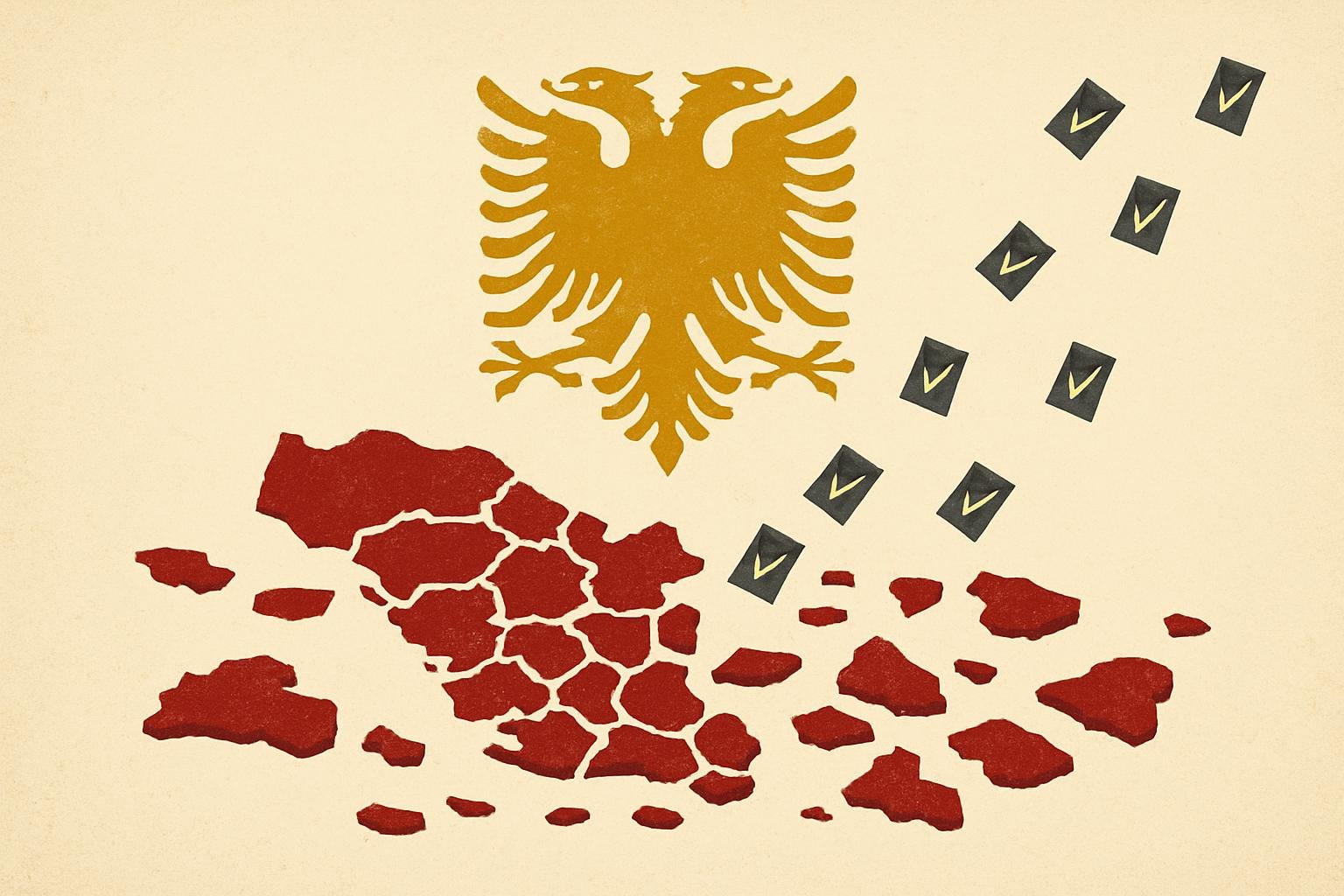
Diaspora shqiptare është afërsisht një e treta e kombit. Në vitin 2025, për herë të parë, iu dha e drejta të votonte nga jashtë. Nuk zgjodhi thuajse askënd. Kjo nuk ka të bëjë me mungesë interesi apo pjesëmarrjeje. Është aritmetikë, e aritmetika ka zgjidhje.
Shteti tashmë e di sa jemi
Përpara se të nisim argumentin për përfaqësimin, le ta mbyllim argumentin për numrat.
Lista e votuesve për zgjedhjet e majit 2025 mbante 3.713.761 emra. Regjistrimi i popullsisë i vitit 2023 numëroi rreth 2,4 milionë njerëz që jetojnë brenda vendit.
Ai hendek nuk është mashtrim. Jemi ne. Askush nuk ta heq emrin nga regjistri civil kur largohesh. Shtetësia të mbetet, numri i letërnjoftimit të mbetet, rreshti në regjistër të mbetet. Dhe meqë 2,4 milionëshi përfshin çdo fëmijë nën tetëmbëdhjetë vjeç, ndërsa lista e votuesve jo, largësia e vërtetë mes këtyre dy numrave është më e madhe nga ç’duket.
Pra diaspora nuk ka qenë kurrë e padukshme për shtetin shqiptar. Ai i ka emrat tanë dhe numrat tanë të letërnjoftimit. Në 2025 kishte edhe adresat tona postare, sepse i përdori: fletët e votimit u nisën me korrier drejt 85 vendeve.
Ka një hollësi në mënyrën se si u nisën ato që thotë gjithçka për sa e dëshiruar ishte kjo. Shteti pagoi për të ta dërguar fletën e votimit. Ti pagove për ta kthyer. Një votë nga Athina apo nga Bronksi i kushtoi votuesit para që një votë në Fier nuk i kushtoi.
Problemi nuk ka qenë kurrë se Shqipëria nuk mund të na gjente. Është se të na gjejë dhe të na përfaqësojë janë gjëra të ndryshme, e vetëm njëra prej tyre është bërë.
Si zhduket një votë e diasporës
Shqipëria ndahet në 12 njësi zgjedhore, të quajtura qarqe. Ulëset në parlament ndahen qark për qark, sipas numrit të votave që mbledh secila parti brenda kufijve të atij qarku.
Kur një shqiptar jashtë voton, fleta nuk shkon në një grumbull më vete për diasporën. Ajo shkon te qarku që ky person la pas — Tiranë, Shkodër, Korçë, kudo që e kishte shtëpinë. Sapo bie atje, numërohet krah gjithë të tjerëve që ende jetojnë në atë qark. Disa mijëra vota diaspore nga Nju-Jorku, disa mijëra nga Milano dhe disa mijëra nga Londra nuk bëhen kurrë një shumë, sepse nuk mblidhen kurrë bashkë. Fillimisht ndahen, pastaj hidhen sërish në dymbëdhjetë qarqe e treten mes banorëve që tashmë po votojnë atje.
Rezultati është një votë pa qendër rëndese. Një grup që është afërsisht një e treta e kombit copëtohet në dymbëdhjetë feta të holla, e asnjë fetë e vetme nuk është aq e trashë sa të ndryshojë se cili kandidat fiton një ulëse. Diaspora mund të regjistrohet në numra të mëdhenj, të votojë me bindje, e prapë të mos zgjedhë askënd që i përgjigjet diasporës, sepse sistemi e tret votën para se ajo të numërohet si bllok.
2025 e provoi
Asgjë nga kjo nuk është parashikim. Ka ndodhur tashmë.
2025 ishin zgjedhjet e para shqiptare në të cilat shtetasit jashtë mund të votonin aty ku jetojnë. Rreth 245.000 u regjistruan për këtë — një numër i konsiderueshëm, një pjesëmarrje serioze për një përpjekje të parë. E megjithatë e lëvizi hartën e ulëseve thuajse aspak.
Votat u hodhën. Por vetëm u shpërndanë. Secila u kthye te qarku i vet dhe u thith, pikërisht ashtu siç e diktojnë rregullat. Një çerek milioni vetë morën pjesë dhe përbërja e parlamentit mezi e ndjeu. Kjo është prova më e qartë se problemi është strukturor. Ndryshoje numrin e votuesve të diasporës dhe nuk ndryshon asgjë, për sa kohë që votat e tyre vazhdojnë të kthehen në qarqet e origjinës.
Demokraci të tjera e kanë zgjidhur tashmë
Ky nuk është problem i vështirë, e Shqipëria s’do të shpikte asgjë të re. Disa demokraci evropiane vendosën shumë kohë më parë që shtetasit jashtë duhet të zgjedhin përfaqësuesit e tyre e i ndërtuan ulëset për këtë.
Italia i zgjedh deputetët nga një njësi zgjedhore e posaçme jashtë vendit, Circoscrizione Estero. Italianët jashtë nuk votojnë te provinca prej së cilës erdhën; votojnë si italianë jashtë vendit e dërgojnë deputetët e senatorët e tyre në Romë.
Franca ka njësi zgjedhore posaçërisht për shtetasit jashtë — députés des Français de l’étranger — që komuniteti francez jashtë vendit të përfaqësohet si vetvetja, jo i përzier në një njësi të brendshme.
Kroacia rezervon ulëse parlamentare për diasporën e vet, një bllok të qëndrueshëm që ekziston pavarësisht se nga cili qark e ka familjen votuesi.
Portugalia i zgjedh deputetët nga dy rrethe zgjedhore jashtë vendit, një për Evropën dhe një për pjesën tjetër të botës, duke u dhënë portugezëve emigrantë një lidhje të drejtpërdrejtë me asamblenë kombëtare.
Katër vende të ndryshme, katër versione funksionale të së njëjtës ide. Diaspora voton si diasporë dhe merr ulëset e veta. Kjo është praktikë e zakonshme në Evropë, jo eksperiment.
Zgjidhja: një qark, ulëse të vërteta
Shqipërisë i duhet një qark zgjedhor i posaçëm i diasporës, me ulëse të rezervuara në parlament.
Mekanizmi është i thjeshtë dhe është e kundërta e asaj që ndodh tani. Në vend që një votë nga jashtë të kthehet në qarkun e origjinës, ajo numërohet brenda një qarku të trembëdhjetë që i përket diasporës. Çdo fletë e diasporës, nga çdo vend, mblidhet në një njësi të vetme. Ajo njësi është mjaft e madhe sa të kalojë pragun e ulëseve, prandaj zgjedh përfaqësuesit e vet — njerëz detyra e të cilëve është t’u përgjigjen shqiptarëve jashtë, sepse ata i vunë atje.
Është një kërkesë e vetme. Është konkrete. Është një gjë që parlamente të tjera e bëjnë tashmë, që do të thotë se mund të shkruhet në ligj, të argumentohet dhe të fitohet. Nuk kërkon që diaspora të jetë më e madhe, apo më e organizuar, apo më atdhetare nga ç’është. Kërkon që votat të mos copëtohen para se të numërohen.
Një ulëse, jo një slogan
Diaspora tashmë e mban Shqipërinë në mënyra që maten lehtë. Remitancat nga jashtë janë një shtyllë e qëndrueshme e ekonomisë. Vëmendja, paratë dhe besnikëria janë të gjitha aty. E vetmja gjë që mungon është zëri politik, e arsyeja pse mungon është një e metë e riparueshme në mënyrën se si numërohet vota.
Një qark i posaçëm është mënyra se si ndryshon kjo. Jo një slogan — një ulëse.
Nëse do që ai qark të ekzistojë, hapi i parë është të numërohesh mes atyre që e kërkojnë. Shto emrin tënd.