 Albania United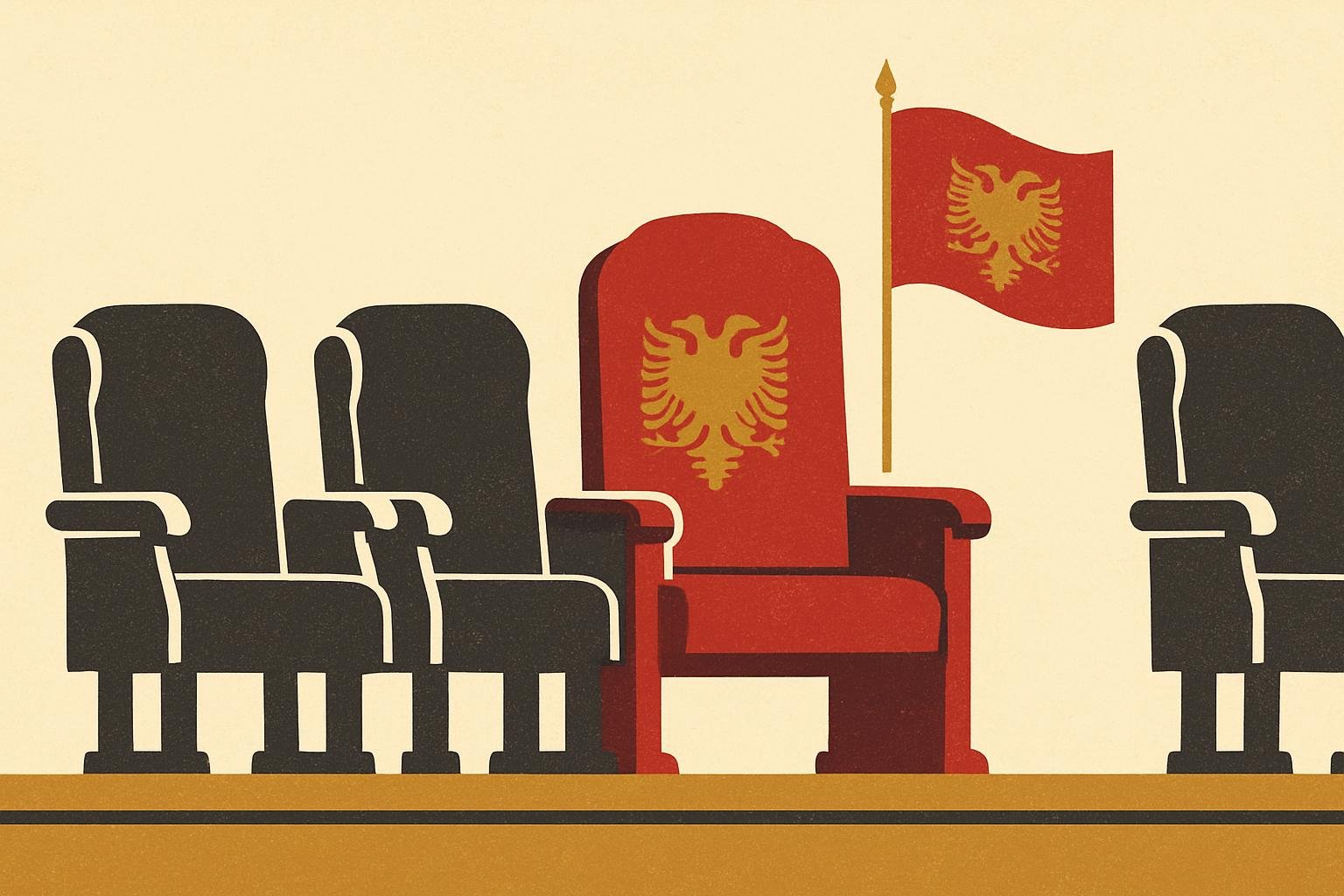
When people first hear the idea of reserved parliamentary seats for the diaspora, it can sound like a special favor — a novel arrangement invented to solve an Albanian problem. It is neither novel nor special. Across Europe, some of the oldest democracies on the continent decided years ago that citizens living abroad should elect their own representatives, and they built the seats to do it. The mechanism is well understood, tested across multiple election cycles, and sitting in law right now in at least five countries.
This matters for Albania because of what happens to the diaspora vote today. As we’ve explained before, an Albanian abroad can now vote, but the ballot folds back into the home qark and dissolves among the residents there. The diaspora — roughly a third of the nation — never gathers in one place, so it elects almost no one. The countries below solved exactly that problem. Here is how each of them did it.
Italy: a whole constituency for citizens abroad
Italy has the most complete version of the idea. It treats the entire world outside its borders as a single Overseas constituency — the Circoscrizione Estero — and divides it into four geographic zones: Europe, South America, North and Central America, and the rest of the world combined.
Italians abroad do not vote into the province their family left. They vote as Italians abroad, in their zone, and they elect their own members of both chambers of parliament. Currently that means eight deputies and four senators sent to Rome with a single job: to represent Italians overseas. The number has shifted over time — it was larger before a 2020 reform cut the size of parliament — but the structure has held since the first overseas vote in 2006. Twenty years of Italian elections have now been run with the diaspora choosing its own representatives.
That is the key feature. An Italian in Toronto and an Italian in Buenos Aires are not scattered back into Sicily and Lombardy. They are counted together, as a diaspora, and their combined weight elects real people.
France: eleven districts drawn across the map of the world
France took a different route to the same destination. Instead of one worldwide constituency, it carved the planet into eleven legislative constituencies for French citizens abroad, each electing one member to the National Assembly. One district covers the United States and Canada. Another covers Northern Europe. Another covers Africa. Together they represent roughly 1.7 million French voters living outside France.
The reform became law in 2010, and the first of these deputies — the députés des Français de l’étranger — took their seats in 2012. They are full members of the National Assembly with the same powers as any deputy elected inside France. French citizens abroad are also represented in the Senate. The principle is identical to Italy’s: the community overseas is represented as itself, not blended into a mainland district where it would vanish.
Croatia: seats that exist no matter the turnout
Croatia reserves seats for its diaspora through a dedicated eleventh electoral district that covers Croatian citizens living abroad. Today it holds three seats. In earlier years the number floated with turnout and could run much higher, and the exact figure has been argued over and revised more than once — but the constant is that the diaspora district exists as a fixed part of the parliament, the Sabor.
Croatia’s story is useful precisely because it has been contested. The size of the diaspora bloc has been a live political question for two decades. That is the normal texture of democracy: countries argue about how many seats, not about whether citizens abroad deserve any. The principle itself is settled. Croatians overseas have their own representatives in Zagreb, and have for a long time.
Portugal: two circles, four fixed seats
Portugal keeps it simple. Its Assembly of the Republic has 230 deputies, and four of them are elected by Portuguese citizens abroad through two overseas electoral circles. One circle is for emigrants registered in Europe and elects two deputies. The other is for emigrants registered outside Europe and elects two more.
These four seats are fixed. They do not expand or contract with turnout, and they do not fold into any home district. A Portuguese citizen in Paris and a Portuguese citizen in Newark send deputies to Lisbon who answer to the emigrant community and no one else. It is a small share of a large parliament, but it is a permanent, guaranteed share — a standing voice rather than an occasional one.
Romania: reserved seats in both chambers
Romania, like Italy, gives its diaspora representation in both houses. Romanians abroad elect four deputies to the Chamber of Deputies and two senators to the Senate — six representatives in total, dedicated to a community of several million Romanians living outside the country.
Romania is a close parallel for Albania: a Balkan nation, a large and dispersed diaspora, and a recent history of emigration driven by the same economic pressures. It concluded, without much controversy, that citizens abroad should have named seats in the national legislature. Those seats are filled at every election.
The pattern underneath all five
Strip away the local differences and every one of these countries is doing the same thing. They take the votes of citizens abroad and, instead of folding them back into home districts where they scatter and dilute, they gather those votes into a dedicated constituency that elects its own representatives.
The variations are real but secondary. Italy uses one worldwide constituency; France uses eleven regional ones. Some countries reserve seats in both chambers; others in only one. The seat counts differ, and several have changed over time. None of that touches the core design, which is identical everywhere: the diaspora votes as a diaspora, and it gets seats of its own.
That is what makes this precedent so strong. It is not one country’s experiment that might or might not travel. It is a common European practice, implemented five different ways, all of them working. When a democracy decides its citizens abroad should be represented, this is the tool it reaches for.
What Albania would be adopting
Albania is already 12 electoral districts — the qarks. A diaspora district would be a 13th, sitting alongside them, with reserved seats in parliament.
The mechanism would be exactly the one these five countries use. A vote cast from New York or Milan or London would no longer travel back to Tirana or Shkodër to be absorbed. It would count inside the 13th district, added to every other diaspora vote from every other country, into one constituency large enough to elect representatives of its own. Those representatives would answer to Albanians abroad, because that is who put them there.
Albania would not be inventing anything. It would be doing what Italy has done since 2006, what France has done since 2012, what Croatia, Portugal and Romania already do at every election. The design is proven. The legal templates exist. The only thing missing is the decision to adopt it.
An ordinary ask
The strongest argument for a diaspora district is how unremarkable it is. This is not a demand for special treatment or a novel constitutional theory. It is a request for the arrangement that some of Europe’s most established democracies already treat as normal — that people who hold citizenship, pay attention, send money home, and stay tied to the country should have a named seat at the table.
Five countries have already answered that question. Albania can give the same answer.
If you want a diaspora district to exist, the first step is to be counted among the people asking for it. Add your name.